


28.08.2026
PPWR and Wooden Packaging: What the New EU Regulation Means for Your Business

Dita Tjumina
Chief Sales Officer
Packaging requirements in Europe are changing. The Packaging and Packaging Waste Regulation (PPWR) introduces new rules intended to reduce packaging waste, increase reuse and recycle, and accelerate the transition towards a circular economy.
As of 12 August 2026, the EU Packaging and Packaging Waste Regulation (PPWR) is generally applicable across the European Union. While many of its requirements will be phased in over the coming years, the regulation marks an important shift towards packaging designed for greater recyclability, reuse and waste reduction. For companies using transport and industrial packaging, this raises an important question: what does PPWR mean for wooden packaging such as pallets, pallet collars and wooden boxes?
What is PPWR?
The Packaging and Packaging Waste Regulation (EU) replaces the previous Packaging and Packaging Waste Directive and creates a more harmonized framework across the European Union. Its objective is not simply to change what packaging is made from. PPWR addresses the entire packaging lifecycle – from design and use to reuse, recycling and waste management.
Among its key objectives are:
- reducing packaging waste.
- increasing packaging reuse.
- improving recyclability.
- reducing unnecessary packaging.
- supporting more circular use of materials.
For businesses, packaging therefore becomes an increasingly important part of both regulatory compliance and supply-chain planning.
Does PPWR apply to wooden packaging? Yes.
PPWR applies to packaging regardless of the material it is made from. This includes wooden transport packaging such as wooden pallets, pallet collars, crates and boxes where they fall within the relevant packaging categories.
This is important because wood already has several characteristics that can support a circular packaging model.
A durable wooden pallet or pallet collar can potentially complete many transport cycles. Damaged components can often be repaired or replaced, extending the packaging’s useful life. At the end of its service life, wood can enter appropriate recycling or recovery streams.
However, choosing wood alone does not automatically make packaging PPWR-compliant.
Companies will need to consider the complete packaging system: how packaging is designed, how many times it is used, how it is returned and managed, and what happens at the end of its useful life.

Reusing will become increasingly important
One of the most significant changes for transport packaging is PPWR’s focus on reuse.
From 1 January 2030, businesses using certain types of transport packaging within the EU will generally need to ensure that at least 40% of such packaging is reusable within a reuse system, subject to the detailed scope, conditions and exemptions established by the Regulation.
The relevant transport packaging categories include formats such as pallets, foldable plastic boxes, boxes, trays, plastic crates, intermediate bulk containers, pails, drums and canisters.
PPWR also introduces stronger reuse requirements for certain transport situations, including specified movements between sites of the same company and certain transport within an EU Member State.
For companies managing significant packaging flows, 2030 may sound distant – but packaging systems, supplier agreements and logistics processes cannot always be changed overnight. The preparation should start earlier.
Companies should start examining questions such as:
How many times is our packaging used?
A reusable solution delivers its greatest value when it remains in circulation rather than becoming waste after a single journey.
Can damaged packaging be repaired?
Repair can extend the useful life of wooden transport packaging and reduce the need for replacement packaging.
Can packaging be returned efficiently?
Reusable packaging needs more than a durable product. It requires a system for collection, return and redistribution.
Are we using more packaging than necessary?
Optimizing dimensions and specifications can reduce material consumption and improve transport and storage efficiency.
Can we document our packaging flows?
As packaging requirements evolve, visibility over what packaging is used, where it goes and how it is managed will become increasingly valuable.
Why Wooden Packaging?
Wooden packaging can be particularly well suited to repeated industrial and transport use. Wooden pallets and pallet collars can be used repeatedly when appropriately designed, handled and maintained. Instead of treating packaging as a disposable item, companies can keep it circulating through the supply chain.
Repair can extend packaging life – A damaged component does not always mean that the entire packaging unit has reached the end of its life. The ability to repair suitable wooden packaging can extend its service life, reduce waste and improve the utilization of the resources already invested in the packaging.
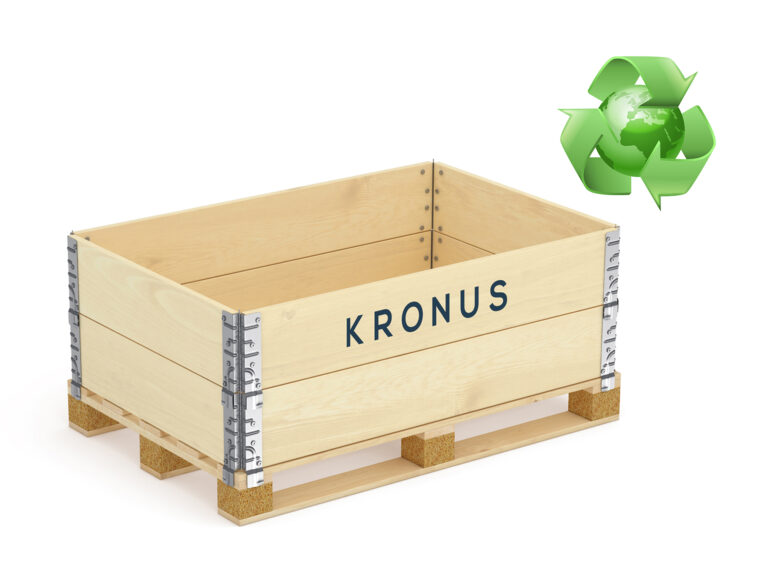
Flexible packaging can reduce unnecessary material. Pallet collars provide an additional advantage: packaging height can be adapted to the contents. Depending on the application, companies can add or remove collars according to the load instead of using a fixed-volume box for every shipment. This flexibility can help optimize packaging use, storage and return logistics.
End-of-life material can remain valuable. Once wooden packaging can no longer be safely reused or repaired, the material can be directed into suitable recycling or recovery processes rather than automatically becoming residual waste. The objective is to extract as much useful life as practical from the packaging and its materials.
For businesses, the transition also creates an opportunity to reconsider packaging as part of the wider supply chain.
A well-designed reusable packaging system can potentially help companies:
- reduce dependence on single use packaging.
- extend packaging lifetimes.
- reduce packaging waste.
- optimize warehouse space.
- improve transport efficiency.
- create more predictable packaging flows.
The best solution will depend on the product, transport distances, return logistics, number of rotations and other operational factors. That is why PPWR preparation should not simply be a matter of replacing one packaging material with another. It should be about building a better packaging system.
How is KRONUS preparing for PPWR?
At KRONUS, preparing for PPWR goes beyond providing reusable wooden packaging. We work closely with our customers to understand their specific requirements and help them navigate the changing regulatory landscape.
Our approach includes:
Customer requirement evaluation
We review and evaluate customer-specific PPWR requirements to understand how they relate to the wooden packaging solutions we supply.
PPWR-related reporting and documentation
KRONUS can provide customers with relevant reports and supporting information related to PPWR requirements, helping procurement and sustainability teams assess their packaging and supplier compliance.
Compliance confirmation
Where the applicable requirements and supporting evidence allow it, KRONUS is prepared to confirm that our products and processes meet the relevant customer and PPWR requirements.
Reusable and circular packaging solutions
Our wooden pallets, pallet collars and other packaging solutions are designed with long-term use, repairability, material efficiency and recyclability in mind — supporting the broader circularity objectives behind PPWR.
Packaging optimization
We work with customers to evaluate packaging specifications and identify solutions that can reduce unnecessary material use while maintaining the required protection, handling and logistics performance.
For us, PPWR preparation is not only about responding to regulations. It is about helping customers understand their packaging requirements, obtaining the necessary information from their supplier and preparing their packaging systems for the changes ahead.
What should your company do before 2030?
The first step does not need to be a complete redesign of your packaging. Start by understanding what you already have.
Review which packaging formats your company uses, where they travel, how many rotations they complete and what happens after delivery. Identify where packaging is already reused and where single-use solutions remain dominant.
Then consider where reusable wooden packaging could provide both regulatory and operational advantages. PPWR will introduce significant changes to the European packaging landscape over the coming years. Companies that start examining their packaging systems now will have more time to test solutions, optimize processes and prepare for the requirements ahead.

KRONUS can help you evaluate your current transport packaging and explore wooden packaging solutions designed around reuse, efficiency and long-term performance. Contact our team to discuss your packaging requirements.