
20.05.2026

Sustainability in packaging: What does it mean?


Sustainability is no longer a trend - it has become a defining factor in how businesses operate, compete, and grow. For companies across logistics, manufacturing, and retail, packaging plays a critical role in achieving environmental goals while maintaining efficiency and cost control. At KRONUS, sustainability is integrated into every stage of our packaging solutions - from material selection to product lifecycle.

Reducing CO₂ emissions through smarter packaging


One of the most impactful ways to reduce environmental footprint is by lowering CO₂ emissions across the supply chain. Packaging choices directly influence this.


Wooden packaging offers clear advantages:

  • It is made from a renewable resource
  • It stores carbon throughout its lifecycle
  • It requires less energy to produce compared to plastic or metal


Additionally, durability plays a key role. Packaging that can be reused multiple times significantly reduces emissions per use. Extending the lifecycle of packaging is one of the most effective ways to lower overall CO₂ impact.

KRONUS – horizontal (6) (1)

Reusability: A key to circular economy

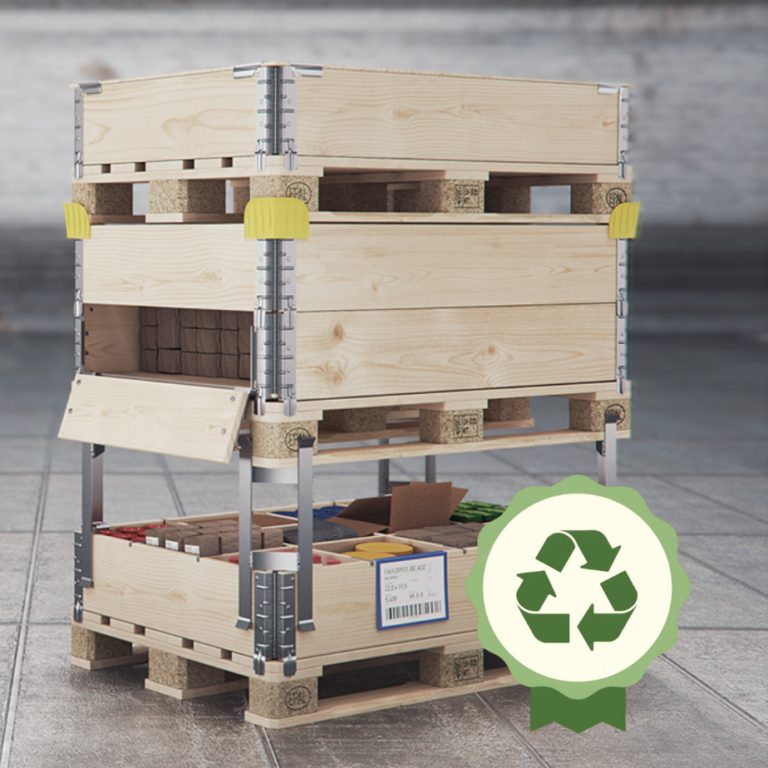
Reusable packaging is at the core of sustainable logistics. KRONUS wooden packaging solutions — including pallets, pallet collars, and boxes — are designed for multiple use cycles, allowing them to remain in circulation for extended periods. Their structure enables easy repair and maintenance, ensuring that damaged components can be quickly restored rather than replaced. As a result, these solutions can be efficiently reintegrated into the supply chain, supporting a circular approach where materials are used longer and waste is minimized.


This reduces the need for constant replacement and minimizes waste generation. Instead of a linear “use and dispose” model, reusable packaging supports a circular approach, where materials remain in use for as long as possible.


Regulatory landscape: EUDR and PPWR

Sustainability is increasingly shaped by regulatory frameworks, especially within the European Union.

KRONUS – horizontal (7) (1)

1. EUDR (EU Deforestation Regulation)

The EUDR focuses on ensuring that products placed on the EU market do not contribute to deforestation. For wooden packaging, this means:

  • Responsible sourcing of raw materials
  • Full traceability across the supply chain
  • Compliance with strict environmental standards

This regulation reinforces the importance of transparency and sustainability in wood-based products.


2. PPWR (Packaging and Packaging Waste Regulation)

The PPWR aims to:

  • Reduce overall packaging waste
  • Increase reuse and recycling rates
  • Promote sustainable packaging materials

For businesses, this means rethinking packaging strategies – prioritizing reusable, durable, and recyclable solutions.


Why It Matters for Businesses?

Sustainable packaging is not just about compliance – it directly impacts business performance.

  • Cost efficiency – Reusable and durable packaging reduces replacement costs and waste management expenses.
  • Operational reliability – High-quality, consistent packaging minimizes product damage and improves logistics efficiency.
  • Market expectations – Customers and partners increasingly expect environmentally responsible solutions.
  • Future readiness – Adapting to regulations like EUDR and PPWR ensures long-term business continuity.

Beyond materials: A holistic approach

Sustainability is not defined by material alone – it encompasses the entire lifecycle and operational approach behind a product. It includes efficient production processes that minimize resource use, optimized logistics and transport that reduce emissions, long product lifecycles that extend usability, and responsible waste management practices that limit environmental impact. At KRONUS, we continuously invest in improving these areas, ensuring that sustainability and performance go hand in hand.


Conclusion

Sustainable packaging is a strategic decision that affects environmental impact, operational efficiency, and long-term competitiveness.

By focusing on CO₂ reduction, reusability, and compliance with evolving regulations, businesses can turn sustainability into a real advantage.

At KRONUS, we believe that the future of packaging lies in solutions that are not only functional and durable – but also responsible.