



05.11.2026

How to Optimize Packaging Costs: 9 Practical Strategies


Packaging costs go far beyond the price of the box, pallet, or container itself. The right packaging solution can help businesses reduce transportation expenses, improve warehouse efficiency, minimize product damage, and lower overall operational costs.

However, many companies still evaluate packaging primarily based on its purchase price. While choosing the cheapest option may seem like an effective way to reduce expenses, it can lead to additional costs throughout the supply chain.

Understanding the total cost of packaging and selecting solutions that match your operational requirements can make a significant difference to long-term profitability.


1. Look Beyond the Initial Packaging Price

One of the most common mistakes in packaging procurement is focusing exclusively on the cost per unit. The purchase price is only one part of the total cost. Businesses should also consider expenses related to:

  • Transportation: The space and weight packaging adds to shipments, including empty returns.
  • Storage: The warehouse space required for packaging before and after use.
  • Handling: The time and labor needed for packing, unpacking, and moving goods.
  • Product damage: The costs of replacing damaged goods, processing claims, and managing returns.
  • Packaging replacement: How frequently packaging needs to be repaired or replaced.
  • Waste management: The costs associated with disposing of packaging materials at the end of their useful life.
KRONUS – horizontal (20)

For example, a low-cost packaging solution that requires frequent replacement may ultimately be more expensive than a durable alternative that can be used repeatedly.

The key is to evaluate the total cost of ownership (TCO), rather than simply comparing purchase prices.


2. Optimize Packaging Dimensions to Reduce Transportation Costs

Transportation is often one of the largest expenses in a supply chain, and packaging dimensions directly influence how efficiently available cargo space is used.

Oversized packaging can result in unnecessary empty space, reducing the number of products that fit into a truck, shipping container, or warehouse storage area. Choosing packaging that matches the dimensions and characteristics of the goods can help businesses:

  • Increase the number of units transported per shipment.
  • Reduce unused space inside packaging.
  • Improve pallet and container utilization.
  • Minimize the need for additional transportation.
  • Support more efficient loading and unloading.

Standardized packaging dimensions can also improve compatibility with existing pallets, warehouse equipment, and automated handling systems.

img-1849 (1)

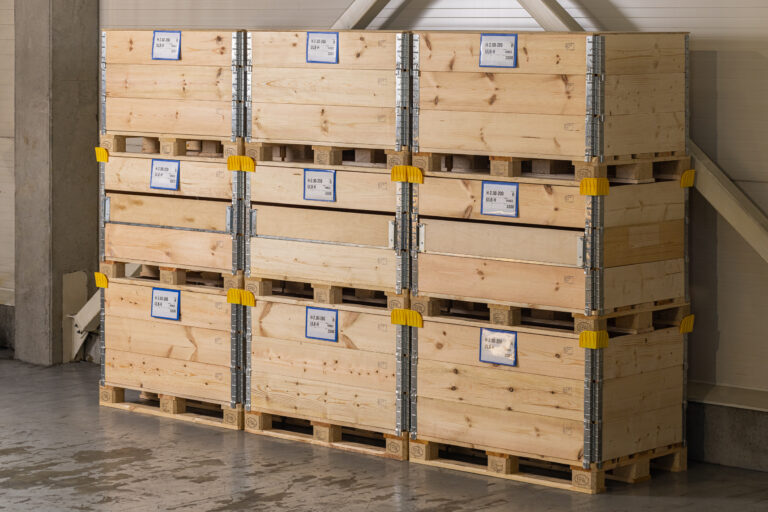
For products with varying heights or volumes, modular packaging solutions, such as wooden pallet collars, provide flexibility by allowing businesses to adjust packaging height according to their needs.

Instead of using several different fixed-height containers, companies can adapt the packaging configuration to the products being transported.


3. Reduce Warehouse Costs with Space-Efficient Packaging

Warehouse space has a direct financial value. Packaging that occupies unnecessary space can increase storage expenses and reduce the capacity available for inventory. This becomes particularly important for companies managing large packaging volumes or operating returnable packaging systems.

Foldable and collapsible packaging can significantly reduce the space required when containers are empty. For example, foldable wooden pallet collars can save up to 87% of storage space when folded, compared with their assembled configuration. This allows businesses to store more empty packaging in a smaller area and improve efficiency in return logistics.

Even relatively small improvements in warehouse space utilization can become financially significant when applied across thousands of packaging units.


4. Consider Reusable Packaging for Long-Term Savings

The choice between single-use and reusable packaging can have a major impact on operating costs. Single-use packaging may be suitable for shipments where returning empty packaging is impractical or economically unjustified.

However, companies with regular deliveries between production facilities, warehouses, suppliers, or distribution centers may benefit from reusable packaging systems. Reusable packaging can reduce the need to purchase new packaging for every shipment.

For example, wooden pallets, pallet collars, and durable wooden boxes can be suitable for repeated use when properly maintained.

Wooden packaging also offers repair possibilities. Damaged components can often be replaced without discarding the entire packaging unit, potentially extending its useful life and reducing replacement expenses.


5. Minimize Product Damage and Associated Costs

Packaging is responsible for protecting goods throughout transportation, storage, and handling. Insufficient protection can result in damaged products, customer complaints, delayed deliveries, and additional administrative work. The financial impact of product damage extends beyond replacing the affected goods. It may also include:

  • Return transportation and replacement shipments.
  • Additional labor for inspection and repacking.
  • Production interruptions caused by damaged components.
  • Customer claims and compensation.
  • Lost sales or reduced customer satisfaction.

Selecting packaging based on product characteristics is therefore essential.

Heavy industrial components may require reinforced wooden boxes or customized pallets, while sensitive products may benefit from internal dividers, protective lids, or additional securing elements. However, packaging should provide an appropriate level of protection without unnecessary material consumption or excessive weight.

Finding this balance helps businesses control costs while maintaining product safety.


6. Improve Handling Efficiency and Reduce Labor Costs

Packaging design can also influence the time employees spend preparing, loading, unloading, and handling shipments. Complicated packaging systems may require additional tools, equipment, or assembly time, increasing labor costs and slowing down operations. Packaging that is easy to assemble and handle can improve productivity, particularly in high-volume environments.

Solutions such as pallet collars and nail-free plywood Clip-boxes can simplify certain packaging operations through modular or tool-free assembly.

Reducing handling time by even a few minutes per shipment can create meaningful savings when repeated across large order volumes.


7. Standardize Packaging Where Possible

Using too many packaging types can increase complexity across procurement, storage, and warehouse operations. Each additional packaging specification may require separate inventory management, purchasing arrangements, and handling procedures. Standardization can help businesses simplify these processes.


Potential advantages include:

  • Easier packaging inventory management.
  • More predictable procurement requirements.
  • Reduced risk of packaging shortages.
  • Improved compatibility with warehouse equipment.
  • More efficient handling and transportation.
  • Opportunities to consolidate orders.
ROM_3837

However, standardization should not come at the expense of product protection or operational efficiency. A combination of standardized packaging for common requirements and customized solutions for specific products may provide the best balance.

For example, companies may use standard wooden pallets and pallet collars for most shipments while relying on customized wooden or plywood boxes for unusually shaped or sensitive goods.


8. Choose a Packaging Supplier That Supports Supply Chain Efficiency

Packaging costs are also influenced by supplier reliability and delivery arrangements. Delayed packaging deliveries can interrupt production, create urgent transportation requirements, or force companies to maintain larger safety stocks. Working with a supplier that understands your operational requirements can help reduce these risks.

Suppliers offering multiple packaging types may also help simplify procurement. For example, manufacturers such as KRONUS provide wooden pallets, pallet collars, wooden and plywood boxes, lids, and accessories, allowing companies to source different packaging components through one supplier.

Depending on the supplier and delivery conditions, consolidated orders and planned deliveries may help improve purchasing and logistics efficiency. A reliable packaging partnership should contribute to operational stability, not simply provide products at a competitive price.


9. Evaluate Packaging Performance Regularly

Packaging requirements change as businesses grow, introduce new products, expand into different markets, or adjust their logistics operations. A packaging solution that worked efficiently several years ago may no longer be the most economical option.

Regular packaging evaluations can help identify unnecessary costs and opportunities for improvement. It is also useful to monitor indicators such as packaging cost per shipment, cost per use, damage rates, handling time, and empty return transportation expenses.

These measurements provide a clearer understanding of packaging performance and help businesses make informed procurement decisions.

KRONUS – horizontal (19)

Conclusion: The Right Packaging Is an Investment in Supply Chain Efficiency

Optimizing packaging costs does not necessarily mean purchasing cheaper packaging.

It means choosing solutions that provide the right balance between product protection, transportation efficiency, storage requirements, handling processes, and long-term usability. By evaluating the total cost of ownership, businesses can identify opportunities to reduce unnecessary expenses throughout the packaging lifecycle.

Whether through better packaging dimensions, reusable wooden packaging, improved warehouse utilization, or more reliable supply arrangements, the right decisions can contribute to measurable operational improvements.